
Recycled Polyester Staple Fiber (rPSF): Complete Buyer Guide
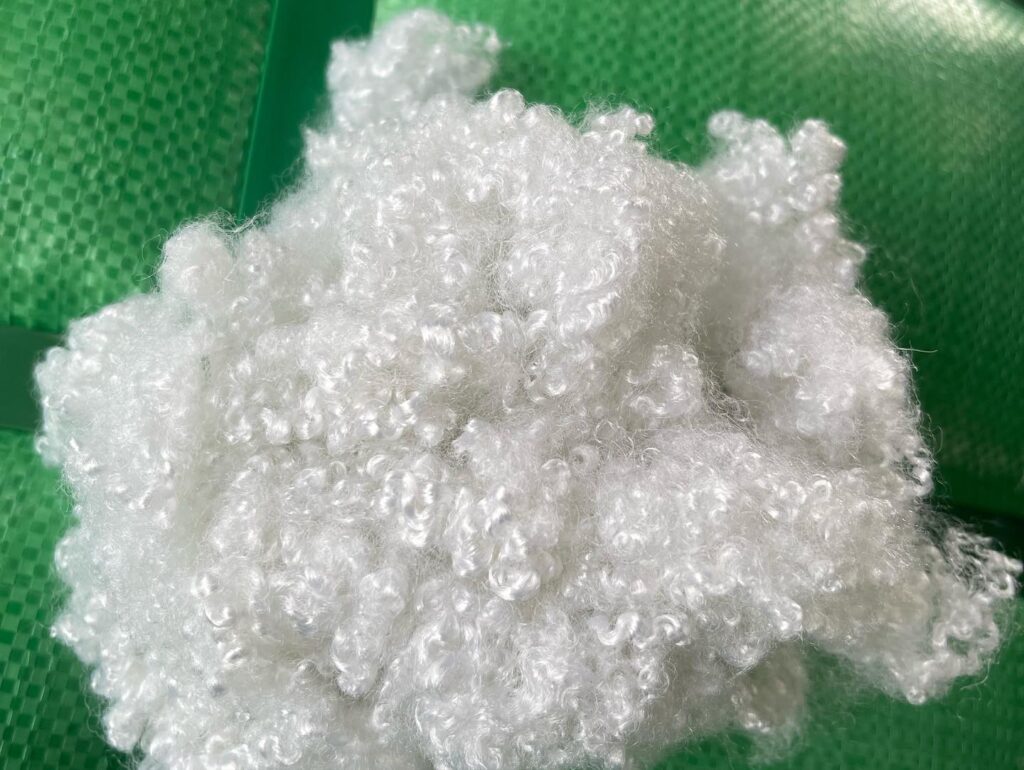
Recycled Polyester Staple Fiber (rPSF) has become an important raw material for textile manufacturers, spinning mills, nonwoven producers, and various industrial applications.
As manufacturers increasingly explore recycled materials and more sustainable sourcing options, recycled polyester staple fiber offers an alternative to virgin polyester in many applications. It can be used in yarn production, mattress and cushion filling, automotive textiles, carpets, nonwoven fabrics, and other technical textile products.
However, choosing the right recycled polyester fiber requires more than simply comparing prices. Buyers need to understand fiber types, denier, cut length, color, siliconized or non-siliconized finishes, technical specifications, and application requirements.
This guide explains the essential information industrial buyers should know before sourcing recycled polyester staple fiber.
Whether you are a textile manufacturer, fiber distributor, importer, or purchasing manager, this guide will help you make more informed sourcing decisions.
1. What Is Recycled Polyester Staple Fiber (rPSF)?
Recycled Polyester Staple Fiber (rPSF) is a short-length polyester fiber manufactured using recycled polyester materials.
One common feedstock is post-consumer PET bottles, although recycled polyester production can also use other suitable recycled polyester materials and production waste, depending on the manufacturing process.
Through recycling and fiber production processes, recycled polyester materials are converted into staple fibers that can be processed in various textile and industrial applications.
Unlike continuous polyester filament, staple fiber consists of individual fibers cut to specific lengths. These fibers can be blended, carded, spun, or processed into nonwoven materials depending on their characteristics.
Key Characteristics of Recycled Polyester Staple Fiber
Recycled PSF is available in different specifications to meet industrial requirements.
Common characteristics include:
- Different denier options, such as 0.9D, 1.4D, 2.5D, 3D, 4D, 6D, 7D, 10D, 15D, 20D, and 25D.
- Various cut lengths, including 32mm, 38mm, 51mm, 64mm, 76mm, and 90mm, subject to product availability.
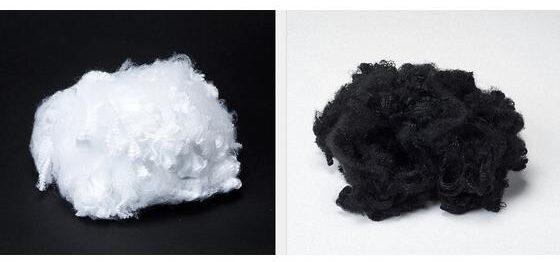
- Different colors, including white and black.
- Different fiber structures, such as solid and hollow.
- Siliconized and non-siliconized options, depending on product requirements.
- Different applications in spinning, filling, nonwoven, automotive, and technical textiles.
The appropriate specification depends on the intended manufacturing process and the required performance of the finished product.
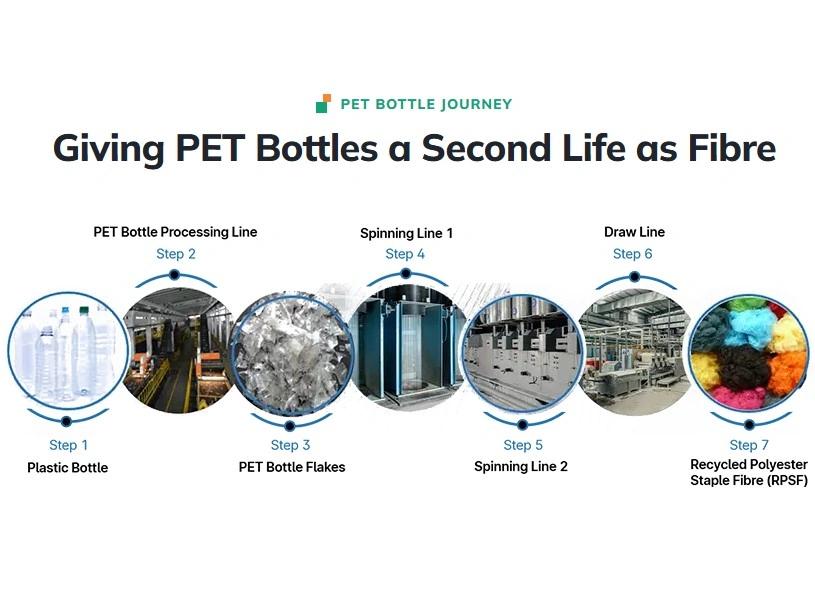
2. How Is Recycled Polyester Staple Fiber Made?
The manufacturing process generally involves converting suitable recycled polyester materials into usable fiber.
For PET bottle-based recycling, the process commonly includes the following stages.
Step 1: Collection and Sorting
Used PET bottles and other suitable polyester materials are collected and sorted.
Materials are selected according to their suitability for recycling and the required quality of the final product.
Step 2: Cleaning and Processing
The selected materials are cleaned to remove labels, caps, dirt, and other unwanted substances.
PET materials are then processed into smaller flakes.
Step 3: Material Preparation
The recycled PET flakes undergo further preparation and quality checks before being used in fiber production.
Depending on the process, additional steps may include drying and material conditioning.
Step 4: Melt Processing and Filtration
Prepared polyester material is melted and passed through filtration systems to remove unwanted impurities.
The quality of material preparation and filtration can influence the consistency of the resulting fiber.
Step 5: Fiber Spinning
The molten polyester is extruded through spinnerets to form continuous filaments.
These filaments are subsequently cooled and processed.
Step 6: Drawing and Crimping
The fibers undergo drawing to develop the required physical properties.
Crimping may also be applied to create the fiber structure needed for specific applications.
Step 7: Cutting and Packaging
The fibers are cut to the required staple length, inspected according to applicable quality procedures, and packaged for storage and transportation.
Note: Manufacturing processes and quality control procedures vary among producers. Buyers should request technical documentation and confirm the actual production process with the relevant supplier.
3. Types of Recycled Polyester Staple Fiber
Recycled polyester staple fiber is available in several types, each designed for different industrial requirements.
Understanding these differences helps buyers select suitable materials for their manufacturing processes.
3.1 Solid Recycled Polyester Fiber
Solid polyester fiber has a solid cross-sectional structure rather than a hollow internal structure.
It is available in different denier and cut-length specifications.
Solid fiber can be considered for applications such as certain spinning processes, nonwoven products, and industrial textile materials.
The suitability of a particular specification depends on the required fiber properties and production equipment.
Vietnam Fiber offers a 20D Solid White Fiber option.
3.2 Hollow Conjugated Siliconized Fiber (HCS)
Hollow Conjugated Siliconized (HCS) fiber features a hollow structure, conjugated configuration, and siliconized surface finish.
These characteristics are commonly associated with filling applications where bulk, resilience, and fiber handling properties are important.
Typical applications include:
- Pillow filling.
- Cushion filling.
- Mattress padding.
- Furniture filling.
- Stuffed toys and plush products.
Vietnam Fiber’s listed HCS recycled fiber options include:
- 3D HCS Recycled Fiber.
- 7D HCS Recycled Fiber.
- 15D HCS Recycled Fiber.
Available cut lengths vary by product.
3.3 Low Melt Polyester Fiber
Low Melt Polyester Fiber is a specialized fiber designed to soften or melt at a lower temperature than conventional polyester fiber.
It is commonly used as a bonding component in thermal-bonded nonwoven manufacturing.
During thermal processing, the low-melting component softens and helps bond surrounding fibers together.
Typical applications include:
- Thermal-bonded nonwoven fabrics.
- Mattress materials.
- Automotive insulation.
- Padding products.
- Selected industrial textile applications.
Vietnam Fiber lists Low Melt Fiber in the following specifications:
- 4D × 51mm White.
- 4D × 51mm Black.
Buyers should confirm melting temperature, bonding performance, composition, and processing conditions through the product’s technical data sheet.
3.4 Black and White Recycled Polyester Fiber
Recycled polyester staple fiber is available in different colors to meet the requirements of various manufacturing applications.
White Recycled Polyester Fiber
White fiber is commonly considered for applications where a light-colored raw material is preferred.
Black Recycled Polyester Fiber
Black fiber may be suitable for applications where dark-colored materials are required or where additional coloring processes are not desirable.
Vietnam Fiber lists several white and black recycled fiber options in different denier and cut-length specifications.
The exact color consistency and quality requirements should be confirmed before ordering.
4. Understanding Polyester Fiber Denier
Denier is one of the most important specifications when purchasing polyester staple fiber.
It measures the mass in grams of 9,000 meters of fiber.
A higher denier indicates a coarser fiber, while a lower denier indicates a finer fiber.
For example:
- 1D represents a finer fiber.
- 3D represents a coarser fiber than 1D.
- 7D represents a coarser fiber than 3D.
- 15D represents a coarser fiber than 7D.
Common Polyester Fiber Denier Options
| Denier | General Description |
|---|---|
| 0.9D | Very fine fiber |
| 1.4D | Fine fiber |
| 2.5D | Fine-to-medium fiber |
| 3D | Medium fiber |
| 4D | Medium fiber |
| 6D | Coarser fiber |
| 7D | Coarser fiber |
| 10D | Coarse fiber |
| 15D | Coarse fiber |
| 20D | Heavy fiber |
| 25D | Heavy fiber |
These descriptions are general comparisons, not technical performance specifications.
How to Choose the Right Denier
The correct denier depends on the intended application.
For spinning applications, finer fibers may be considered depending on yarn count, spinning system, blending ratio, and production requirements.
For filling applications, medium or coarser fibers may be evaluated depending on the desired bulk and product characteristics.
For nonwoven applications, fiber selection depends on the bonding method, web structure, and finished product requirements.
Buyers should always confirm the required denier with their production team before placing an order.
5. Understanding Polyester Fiber Cut Length
Cut length refers to the length of individual staple fibers.
It is another important specification that affects fiber processing and product performance.
Common cut lengths available in the recycled polyester fiber market include:
- 32mm.
- 38mm.
- 51mm.
- 64mm.
- 76mm.
- 90mm.
Why Does Cut Length Matter?
Cut length influences how fibers behave during manufacturing.
It can affect:
- Fiber blending.
- Carding performance.
- Web formation.
- Spinning compatibility.
- Processing efficiency.
- Finished product characteristics.
For example, spinning mills need to consider fiber length compatibility with their spinning systems and other blending materials.
Nonwoven manufacturers should consider cut length in relation to their web-forming and bonding processes.
There is no single cut length suitable for every application.
The best option should be selected based on the machinery, production method, and final product requirements.
6. Main Applications of Recycled Polyester Staple Fiber
Recycled polyester staple fiber is used in various industrial sectors.
The following are common application areas.
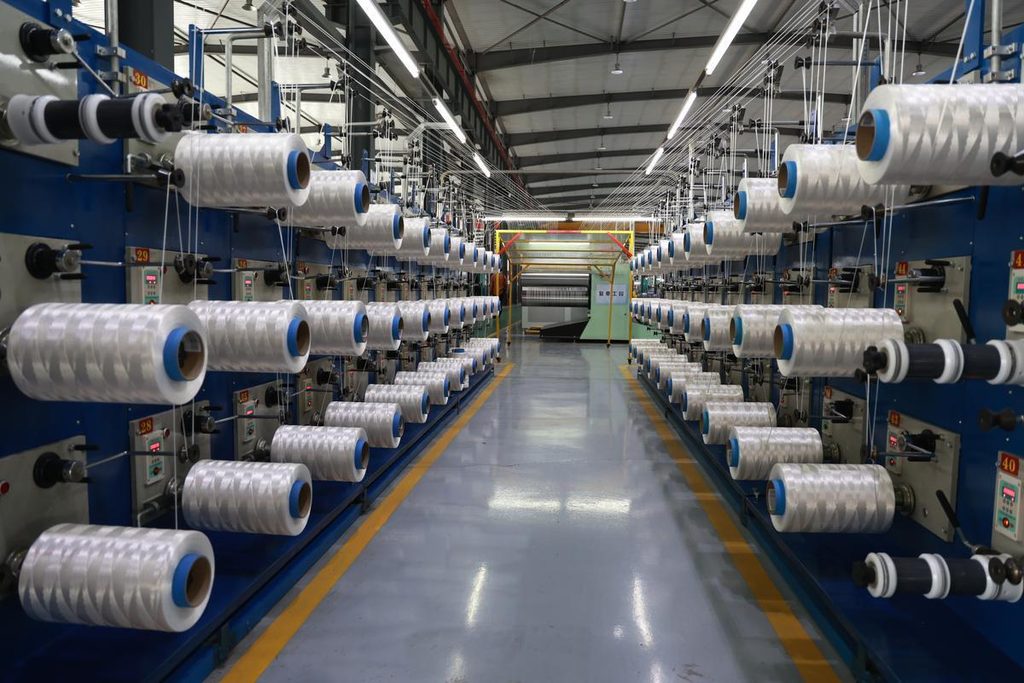
6.1 Yarn Spinning
Recycled polyester staple fiber can be used in polyester yarn production and blending applications.
Spinning mills may evaluate recycled PSF based on:
- Denier.
- Cut length.
- Fiber strength.
- Elongation.
- Crimp characteristics.
- Processing compatibility.
The appropriate specification depends on the yarn count and spinning system.
6.2 Mattress and Padding
Polyester staple fiber is used in selected mattress, padding, and cushioning applications.
Hollow and conjugated fibers may be considered when bulk and resilience are important.
Fiber selection should account for the required filling characteristics and production process.
6.3 Nonwoven Manufacturing
Recycled polyester fiber can be used in different nonwoven production technologies.
Common applications include:
- Needle-punched nonwoven.
- Thermal-bonded nonwoven.
- Industrial felt.
- Padding materials.
- Selected technical textile products.
Low Melt Fiber can be used as a bonding component in suitable thermal-bonding applications.
6.4 Automotive Applications
Polyester staple fiber is used in selected automotive textile and nonwoven products.
Potential applications include:
- Automotive carpet.
- Interior padding.
- Sound-absorbing materials.
- Thermal insulation.
- Nonwoven components.
Product suitability depends on the technical, physical, and regulatory requirements of the automotive application.
6.5 Furniture and Bedding
Polyester staple fiber is widely considered for filling and padding materials used in:
- Sofas.
- Cushions.
- Pillows.
- Mattresses.
- Upholstery.
- Home textile products.
HCS fiber may be particularly relevant for applications requiring bulk and resilience.
6.6 Other Industrial Applications
Depending on the fiber specification, recycled polyester staple fiber may also be used in:
- Carpets and rugs.
- Geotextiles.
- Cleaning textiles.
- Stuffed toys and plush filling.
- Thermal and acoustic insulation.
The final application should always be matched with the confirmed technical specifications of the product.
7. Recycled Polyester Fiber vs Virgin Polyester Fiber
One of the most common questions from industrial buyers is whether to choose recycled polyester or virgin polyester staple fiber.
Both materials are polyester-based, but their raw material sources are different.
| Comparison | Recycled Polyester Fiber | Virgin Polyester Fiber |
|---|---|---|
| Raw material | Recycled polyester materials | Newly produced polyester raw materials |
| Resource approach | Uses recycled feedstock | Uses virgin feedstock |
| Sustainability considerations | Can support recycled material sourcing | Uses non-recycled feedstock |
| Product specifications | Depend on producer and grade | Depend on producer and grade |
| Applications | Spinning, nonwoven, filling and others | Spinning, nonwoven, filling and others |
| Quality consistency | Depends on feedstock and process control | Depends on manufacturing and process control |
| Certification | Depends on verified certification | Depends on applicable certifications |
Which One Should Buyers Choose?
The decision depends on several factors:
- Required product specifications.
- Manufacturing process compatibility.
- Finished product quality requirements.
- Customer sustainability requirements.
- Certification and traceability requirements.
- Price and total sourcing costs.
Recycled polyester is not automatically suitable for every application, and virgin polyester is not automatically superior in every case.
Buyers should compare actual technical data, samples, and production performance before making a purchasing decision.
8. Key Technical Specifications Buyers Should Check
Before purchasing recycled polyester staple fiber, buyers should review the following technical information.
| Specification | What Buyers Should Check |
|---|---|
| Fiber Type | Solid, Hollow, HCS, Low Melt, or other |
| Denier | 0.9D, 1.4D, 3D, 6D, 7D, 15D, etc. |
| Cut Length | 32mm, 38mm, 51mm, 64mm, 76mm, etc. |
| Color | White, Black, or other |
| Siliconized | Siliconized or non-siliconized |
| Tenacity | Fiber strength |
| Elongation | Fiber extension before breaking |
| Crimp | Crimp characteristics, where applicable |
| Moisture | Moisture content |
| Oil Content | Applicable fiber finish content |
| Packaging | Bale weight and packaging details |
| Certification | Relevant certification and traceability documents, if required |
Not all specifications apply to every fiber type.
For example, melting characteristics are particularly important for Low Melt Fiber, while hollow structure and resilience may be important for HCS filling fiber.
Buyers should request a Technical Data Sheet (TDS) for the specific product they intend to purchase.
9. How to Choose a Reliable Recycled Polyester Fiber Supplier
Choosing a reliable supplier is an important part of the purchasing process.
A competitive price alone does not guarantee a successful transaction.
Industrial buyers should evaluate suppliers based on several factors.
9.1 Product Range
Check whether the supplier can offer the fiber types and specifications required by your factory.
These may include:
- Recycled PSF.
- Solid Fiber.
- HCS Fiber.
- Low Melt Fiber.
- White Fiber.
- Black Fiber.
9.2 Technical Documentation
Request the product’s technical data sheet and available quality documents.
Check whether the specifications match your production requirements.
9.3 Sample Evaluation
Where possible, request samples before confirming a large order.
Conduct appropriate testing and production trials to evaluate product suitability.
9.4 Supply Availability
Confirm product availability, production or stock preparation schedules, minimum order quantities, and delivery lead times.
9.5 Communication and Commercial Support
A reliable sourcing partner should provide clear communication about:
- Product specifications.
- Pricing.
- MOQ.
- Lead time.
- Packaging.
- Payment terms.
- Shipping arrangements.
- Required documentation.
9.6 Certification and Traceability
If recycled-content certification is required, request the relevant documents and verify their validity and scope.
For example, buyers may require Global Recycled Standard (GRS) documentation.
Do not assume that all recycled polyester fiber is GRS certified. Certification must be confirmed for the relevant product and supply chain.
10. Why Source Recycled Polyester Fiber from Vietnam?
Vietnam is an established country in the global textile and manufacturing supply chain.
Sourcing recycled polyester staple fiber from Vietnam can be an option for international buyers seeking connections with suppliers in Southeast Asia.
Potential sourcing considerations include:
- Access to Vietnamese recycled fiber supply sources.
- Opportunities to evaluate different fiber specifications.
- International trading and logistics connections.
- Communication with sourcing partners.
- Access to regional textile manufacturing networks.
However, buyers should evaluate each supplier individually based on product quality, commercial terms, production availability, and documentation.
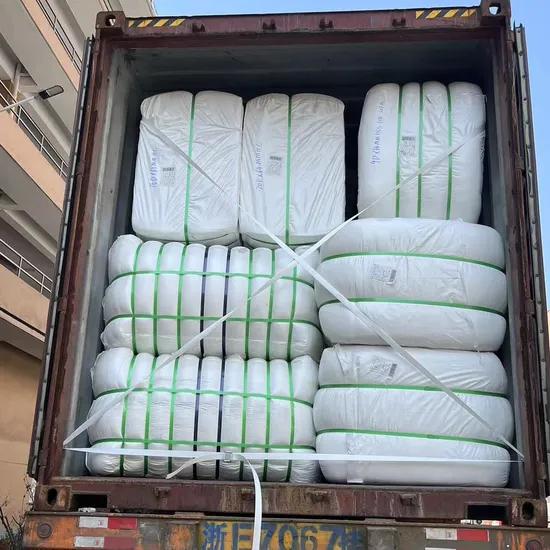
Vietnam Fiber: Connecting Buyers with Recycled Fiber Suppliers in Vietnam
Vietnam Fiber supports international and domestic buyers looking for recycled polyester staple fiber from Vietnam.
Our product catalogue covers different recycled fiber options, including:
- Recycled Polyester Staple Fiber.
- Solid Polyester Fiber.
- HCS Recycled Fiber.
- Low Melt Fiber.
- Black Recycled Polyester Fiber.
- White Recycled Polyester Fiber.
Available specifications include different denier, cut length, and color options, subject to supplier confirmation.
We focus on specification-based sourcing and B2B inquiry coordination to help buyers communicate their requirements and explore suitable supply options.
Explore our product catalogue: Vietnam Fiber Products
11. How to Request a Quotation for Recycled Polyester Staple Fiber
To receive a relevant quotation, buyers should provide clear product requirements.
The following information will help the sourcing process.
| Information | Example |
|---|---|
| Fiber Type | Recycled PSF / HCS / Low Melt |
| Denier | 3D / 7D / 15D |
| Cut Length | 32mm / 51mm / 64mm |
| Color | White / Black |
| Siliconized | Yes / No / As required |
| Application | Spinning / Filling / Nonwoven |
| Quantity | Required metric tons |
| Destination | Country and destination port |
| Incoterms | FOB / CFR / CIF |
| Delivery Schedule | Required delivery date |
If you do not know the exact fiber specification, you can describe your application and production requirements.
The sourcing team can then coordinate with suitable suppliers to discuss available specifications.
Request a Quote from Vietnam Fiber
Looking for recycled polyester staple fiber for your factory or distribution business?
Contact Vietnam Fiber to discuss your product requirements, available specifications, and sourcing options.
Send us the following information:
- Product type.
- Required denier and cut length.
- Color.
- Application.
- Required quantity.
- Destination country or port.
Our team will help coordinate your inquiry and supplier quotation.
Visit: https://vietnamfibers.com/products/
Request a Quote: https://vietnamfibers.com/request-a-quote/
12. Frequently Asked Questions About Recycled Polyester Staple Fiber
Q1. What is recycled polyester staple fiber?
Recycled polyester staple fiber is a short-length polyester fiber produced from recycled polyester materials. It is used in spinning, nonwoven, filling, bedding, automotive, and other industrial applications.
Q2. What is the difference between recycled PSF and virgin PSF?
Recycled PSF is produced using recycled polyester feedstock, while virgin PSF is produced from newly manufactured polyester raw materials. Both can be used in various industrial applications, depending on their specifications and quality.
Q3. What denier options are available for recycled polyester fiber?
Common market options include 0.9D, 1.4D, 2.5D, 3D, 4D, 6D, 7D, 10D, 15D, 20D, and 25D. Actual availability depends on the supplier and product type.
Q4. What cut lengths are available?
Common cut lengths include 32mm, 38mm, 51mm, 64mm, 76mm, and 90mm. Buyers should confirm the available specifications for each product.
Q5. What is HCS polyester fiber?
HCS stands for Hollow Conjugated Siliconized. It is a polyester fiber with a hollow structure, conjugated configuration, and siliconized finish. It is commonly considered for pillow, cushion, mattress, and other filling applications.
Q6. What is Low Melt Polyester Fiber used for?
Low Melt Polyester Fiber is used as a bonding component in suitable thermal-bonded nonwoven processes and selected padding applications.
Q7. Is recycled polyester fiber suitable for spinning?
Yes, certain recycled polyester staple fiber specifications can be used in spinning and yarn production. Suitability depends on denier, cut length, fiber strength, elongation, and compatibility with the spinning system.
Q8. Can recycled polyester fiber be used for pillow filling?
Yes. Suitable polyester fiber types, including HCS options, are commonly used in pillow and cushion filling. Buyers should evaluate bulk, resilience, softness, and other required properties.
Q9. Is all recycled polyester fiber GRS certified?
No. GRS certification must be verified through the relevant certification documents and supply chain records. Buyers should request evidence if certification is a purchasing requirement.
Q10. How can I get a quotation from Vietnam Fiber?
Visit the Vietnam Fiber product catalogue and send your required fiber type, denier, cut length, color, quantity, application, and destination. The team can coordinate with suitable suppliers to discuss available products and quotations.
Conclusion
Recycled Polyester Staple Fiber is an important raw material for textile manufacturers, nonwoven producers, filling manufacturers, and other industrial buyers.
Choosing the right product requires careful consideration of fiber type, denier, cut length, color, siliconized finish, technical properties, and manufacturing requirements.
Before placing an order, buyers should review technical documentation, evaluate samples where appropriate, confirm supply availability, and agree on commercial and delivery conditions.
Vietnam Fiber connects buyers with recycled fiber suppliers in Vietnam and supports specification-based B2B sourcing inquiries.
Whether you are looking for recycled PSF, Solid Fiber, HCS Recycled Fiber, Low Melt Fiber, or black and white recycled polyester staple fiber, we welcome you to share your requirements.
Contact Vietnam Fiber today to discuss your recycled polyester staple fiber sourcing needs.
Website: https://vietnamfibers.com/